






Introduction
Outdoor living spaces have evolved dramatically from simple concrete slabs with a grill to sophisticated outdoor rooms that rival interior comfort and style. Today's homeowners view their patios as essential extensions of their living space—places where families gather, entertain friends, and create lasting memories. The shift toward modern outdoor patio design reflects a desire for functional, beautiful spaces that blend seamlessly with home architecture while requiring minimal maintenance.
This guide explores 12 modern patio ideas that combine contemporary aesthetics with practical functionality. You'll discover how large-format pavers, strategic zoning, and smart features can transform your backyard into a stunning retreat. Whether you're starting from scratch or renovating an existing space, these strategies will help you create a modern backyard patio that enhances your home's value and your family's lifestyle. As a home improvement specialist, I prioritize designs that offer both visual appeal and long-term durability—because the best outdoor spaces are those you'll enjoy for decades.
What Defines Modern Outdoor Patio Design?
Before diving into specific ideas, it's essential to understand what distinguishes modern outdoor patios from traditional designs. Contemporary patio aesthetics center on clean lines and minimalist principles—think geometric shapes, uncluttered surfaces, and intentional simplicity rather than ornate details.
Functional zoning is a hallmark of patio modern design, with distinct areas dedicated to specific activities: dining near the kitchen, lounging around fire features, and cooking in designated outdoor kitchen spaces. This approach maximizes usability while creating natural flow between zones.
Material selection emphasizes durability and low maintenance. Modern patios favor stamped concrete, large-format porcelain pavers, and composite materials over high-maintenance wood or traditional brick. These materials withstand weather extremes while requiring only occasional cleaning.
Integration with surrounding landscape and home architecture creates visual cohesion. Modern patios don't exist as isolated features but rather extend interior design language outdoors through matching materials, complementary colors, and thoughtful transitions.
Contemporary features like linear fire elements, built-in seating with storage, and architectural privacy screens replace bulky furniture and traditional fence lines. The result is sleek, purposeful design that serves modern family needs.
12 Modern Outdoor Patio Design Ideas for Your Space
These modern patio ideas can be mixed and matched to suit your specific space, budget, and lifestyle. Whether you're working with a compact city yard or spacious suburban lot, these concepts scale to fit your needs while maintaining contemporary appeal.
1. Large-Format Paver Layouts for Contemporary Appeal
Large-format pavers measuring 16"x16" or larger create the foundation for sleek, modern aesthetics. These oversized tiles produce fewer grout lines, resulting in cleaner visual flow and simpler installation compared to traditional small pavers. Stamped concrete or large-format porcelain pavers work exceptionally well for this application.
Layout matters significantly—simple grid patterns emphasize geometric precision, while offset arrangements add subtle visual interest without sacrificing the clean, contemporary look. From a durability standpoint, stamped concrete offers exceptional value with a lifespan exceeding 25 years, far outlasting many trendy materials that require frequent replacement.
2. Functional Zoning: Separate Dining and Lounge Areas
Creating distinct zones transforms a basic patio into a true outdoor room. Define separate areas using subtle level changes, material transitions, or built-in dividers rather than obvious barriers. Your dining zone should measure at least 10'x12' to comfortably accommodate a table with chairs and adequate circulation space.
The lounge zone typically centers around a fire feature, with seating positioned 6-8 feet away for comfort and safety. Use different paver patterns, border treatments, or material transitions to visually separate zones without erecting walls. This strategy, recommended by home improvement specialists, maximizes your usable outdoor space while maintaining open, flowing design.
3. Sunken Fire Features as Focal Points
Built-in fire pits or sunken fire bowls create architectural statements that anchor your outdoor space. Modern materials like steel, poured concrete, or natural stone complement contemporary design while providing durability. These features serve dual purposes—ambiance during cool evenings and visual interest during daytime hours.
Safety considerations are paramount: gas lines require professional installation by licensed contractors, and placement should be central to seating arrangements while maintaining at least 15 feet clearance from structures. Sunken designs integrate more seamlessly than elevated fire pits, creating sophisticated focal points without obstructing sightlines.
4. Vertical Privacy Screens and Living Walls
Modern privacy solutions avoid bulky fences in favor of sleek vertical elements. Slatted wood screens, powder-coated metal panels, or climbing plants on contemporary trellises provide seclusion without closing off your space entirely. Living walls incorporate greenery vertically, adding lush texture without consuming valuable floor area.
For maximum durability with minimal maintenance, choose composite or metal materials over natural wood. These materials resist warping, fading, and rot while maintaining their contemporary appearance for decades. Strategic placement of privacy screens creates intimate zones within larger patios.
5. Smart Irrigation Systems for Low-Maintenance Landscaping
WiFi-controlled drip irrigation systems represent the intersection of technology and sustainability in modern outdoor design. Weather-responsive systems automatically adjust watering schedules based on precipitation and temperature, preventing overwatering while keeping border plantings healthy. Integration with smart home systems allows convenient control from your phone.
The practical benefit extends beyond convenience—properly programmed smart irrigation typically reduces water consumption and utility bills by 20-30%. As a home improvement investment, these systems add tangible value while supporting the low-maintenance philosophy central to contemporary design.
6. Mixed Material Borders for Visual Definition
Combining pavers with contrasting materials like gravel, river rock, or decorative stone creates clean edges that define your patio boundaries. This approach prevents grass encroachment, reduces edging maintenance, and adds textural interest. The modern aesthetic favors deliberate contrasts—smooth concrete pavers paired with rough river stone, or light-colored porcelain offset by dark lava rock.
Beyond aesthetics, mixed borders solve practical problems by creating natural drainage channels and reducing the amount of hardscaping required, thereby lowering overall project costs while maintaining visual sophistication.
7. Built-In Seating with Hidden Storage
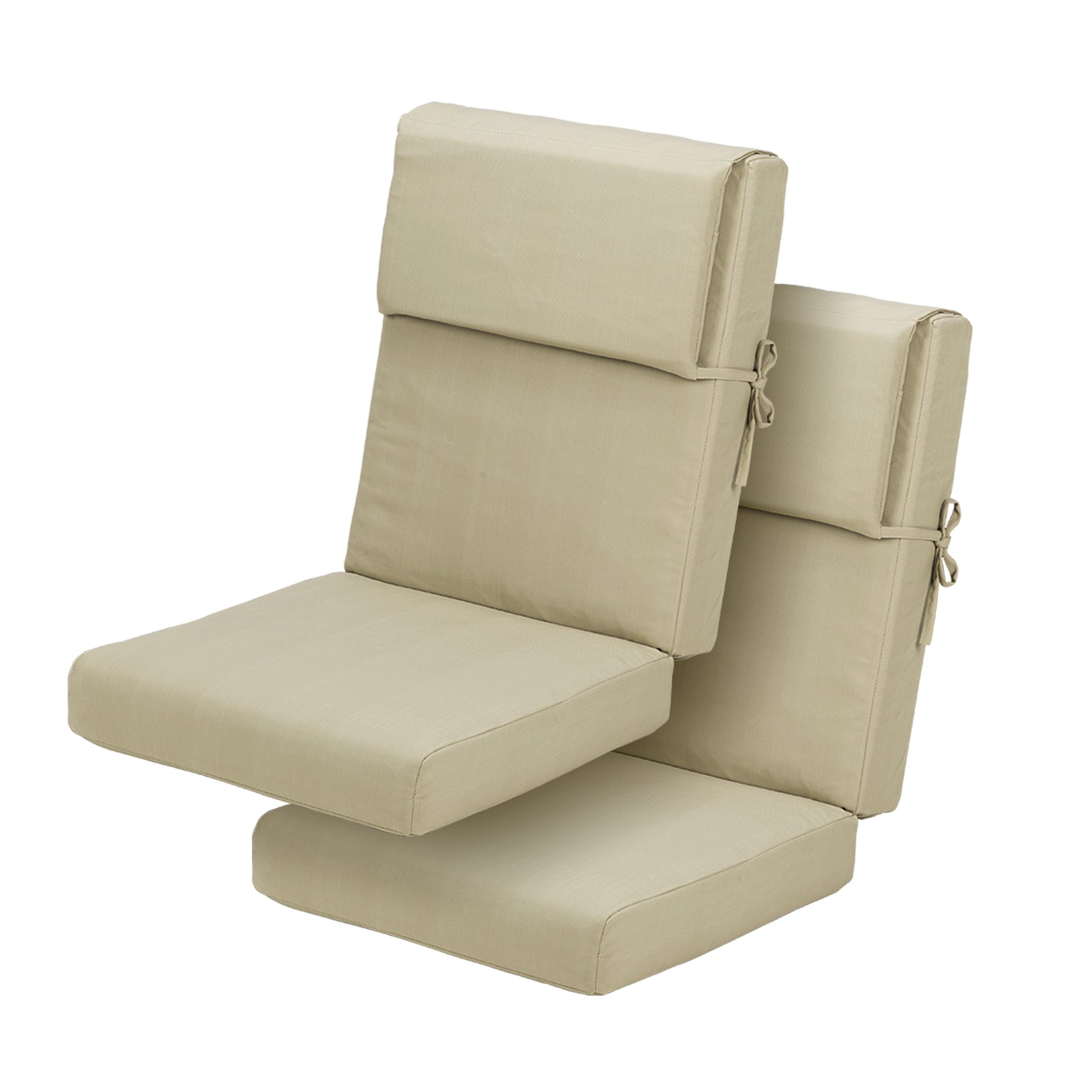
Custom concrete or composite benches with lift-top storage maximize functionality in smaller spaces while maintaining clean lines. Built-in seating eliminates the need for bulky freestanding furniture that clutters modern designs. Hidden storage compartments keep outdoor cushions protected when not in use along with toys, gardening supplies, and entertainment accessories.
This integrated approach creates permanent seating arrangements that anchor your design while providing practical storage solutions. The result is tidier, more organized outdoor space that maintains its contemporary appearance.
8. Minimalist Pergola Structures for Shade
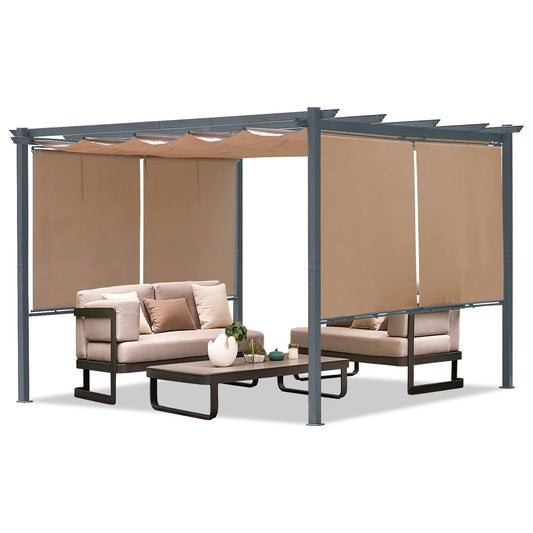
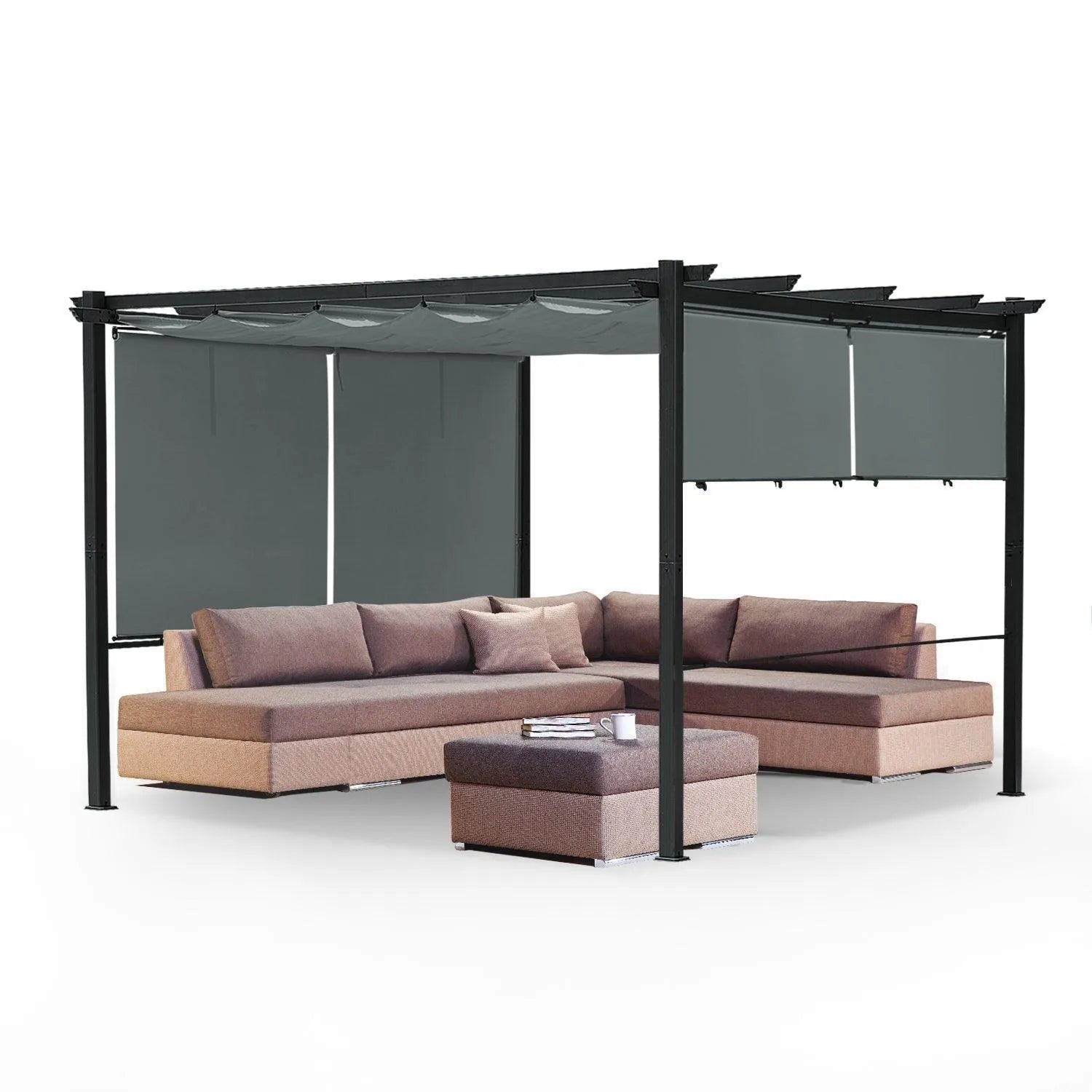
Clean-lined aluminum or steel pergolas provide architectural shade without the ornate detailing of traditional wooden structures. Flat-roof or louvered designs align with modern aesthetics while offering adjustable sun control. Pre-wire these structures for lighting and ceiling fans during construction to avoid visible conduit later.
Powder-coated aluminum represents the ideal material choice—it requires zero maintenance, resists corrosion in any climate, and maintains its appearance indefinitely. This modern alternative to traditional lattice pergolas complements contemporary home architecture beautifully.
9. Outdoor Lighting Zones for Ambiance and Safety
Layered lighting transforms patios from daytime spaces into evening retreats. Implement a three-layer approach: ambient lighting (overhead fixtures), task lighting (illuminating cooking and dining areas), and accent lighting (highlighting steps, borders, and architectural features). LED strips installed under built-in seating create dramatic uplighting effects while path lighting ensures safe navigation.
Smart lighting controls allow you to program schedules, adjust brightness, and create scenes for different occasions—all from your smartphone. This technology-forward approach aligns perfectly with modern design principles while adding genuine convenience and safety.
10. Multi-Level Patios for Sloped Yards
Tiered designs turn challenging sloped terrain into architectural assets by creating distinct outdoor "rooms" at different elevations. Position your upper level adjacent to the kitchen for easy dining access, while the lower level hosts a fire pit lounge area that feels separate and intimate. Retaining walls serve double duty as seating ledges, maximizing functionality.
This approach transforms problematic slopes into design opportunities, adding visual interest through elevation changes while solving drainage challenges naturally through gravity-fed water flow.
11. Permeable Paver Systems for Eco-Friendly Drainage
Permeable paving systems address environmental concerns while preventing water pooling on your patio surface. Grid systems allow rainwater to drain through to the ground below, reducing runoff and meeting municipal stormwater requirements in many areas. This environmentally responsible choice prevents erosion while maintaining modern aesthetics through clean, geometric patterns.
Beyond environmental benefits, permeable systems eliminate puddles and reduce ice formation in winter climates, making your outdoor space safer and more usable year-round.
12. Indoor-Outdoor Flow with Matching Materials
Creating seamless transitions between interior and exterior spaces makes both areas feel larger. Use identical or complementary flooring materials—large-format porcelain tiles work exceptionally well since they're suitable for both applications. Install floor-to-ceiling glass doors that fully retract, eliminating the visual barrier between spaces.
This design strategy requires careful drainage planning at the threshold to prevent water intrusion, but the dramatic effect of expanded living space justifies the additional planning. Matching materials create visual continuity that's central to modern design philosophy.
Choosing the Right Materials for Your Modern Patio
Stamped Concrete vs. Pavers vs. Natural Stone
Material selection significantly impacts both aesthetics and long-term satisfaction. Stamped concrete offers the most durable, lowest-maintenance option with a 25-30 year lifespan and cost-effective pricing at $8-12 per square foot installed. It mimics high-end materials while requiring only occasional pressure washing.
Porcelain pavers deliver modern aesthetics with individual tile replacement capability if damage occurs. These frost-resistant tiles cost $12-20 per square foot and offer design flexibility through various sizes and patterns.
Natural stone provides luxury appearance with unique variations but commands premium pricing at $15-30 per square foot while requiring periodic sealing to maintain appearance and prevent staining.
As a home improvement specialist, I recommend stamped concrete for most modern patio designs. It offers superior durability, requires minimal maintenance compared to wood decking that needs annual sealing, and provides design versatility at reasonable cost. The investment pays dividends through decades of trouble-free performance.
Planning Your Modern Patio Layout: Zoning Strategies
Effective zoning begins with understanding minimum spatial requirements for each activity area. Your cooking zone needs at least 6'x8' for a built-in grill or outdoor kitchen with adequate counter space. The dining zone requires 10'x12' minimum to accommodate a six-person table with chair clearance and circulation space around the perimeter.
Lounge zones centered on fire features should measure approximately 12'x12' to fit sectional seating with comfortable spacing. Transition zones—the pathways connecting these areas—need 3-4 feet width for comfortable passage.
Strategic positioning enhances functionality: place dining near your kitchen door for easy food service, position fire pit lounges in the most private corner of your yard, and ensure 36-inch minimum walkways between all zones. Consider sun path when planning—provide shade over dining areas while allowing sun exposure for lounging spaces where warmth is welcome.
Sketch your zones before excavation begins. This simple planning step prevents costly mistakes and ensures your finished patio serves your family's specific needs. When browsing patio furniture, measure pieces against your zone dimensions to confirm proper fit.
Conclusion
Modern outdoor patio design successfully combines clean, contemporary aesthetics with practical functional zoning to create spaces that truly extend your living area. By incorporating durable materials like stamped concrete, implementing smart features including irrigation and layered lighting, and following strategic zoning principles, you can transform your backyard into a sophisticated retreat. These ideas adapt to any budget or space size—mix and match elements that align with your priorities.
Professional advice: proper base preparation and drainage form the foundation of any successful patio project. Your most important investment is quality materials that withstand your specific climate challenges. While many design elements suit DIY implementation, complex features involving gas lines, electrical work, or structural elements require licensed contractors to ensure safety and code compliance.
Ready to transform your backyard into a modern outdoor living space? Start by assessing your site conditions, measuring your available space, and identifying which zones matter most for your family's lifestyle. Whether you're planning a complete patio renovation or adding modern elements to an existing space, thoughtful design creates outdoor rooms you'll enjoy for decades.

