


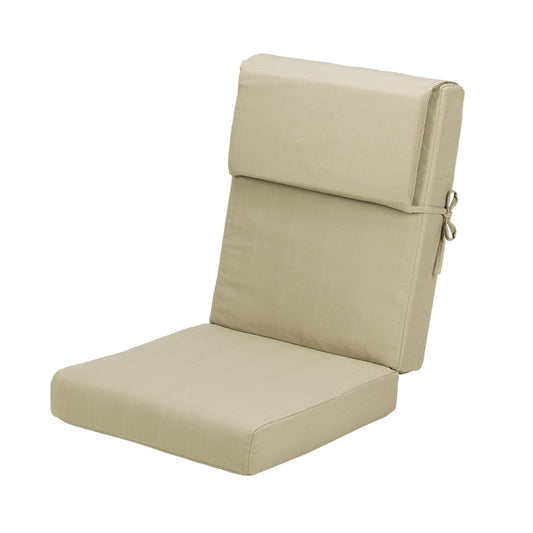




Shopping for new patio cushions and noticed some have a decorative rope-like trim around the edges while others don't? That trim is called welting (or piping), and it's more than just decoration. This seemingly small design detail can dramatically impact how long your cushions maintain their shape, how well they withstand daily use, and whether they'll still look crisp after years of backyard gatherings.
In this guide, you'll learn exactly what welting on a cushion is, the functional differences between corded and flat welting, when the extra cost is justified for outdoor furniture, and expert recommendations for different cushion types. As outdoor furniture specialists at Aoodor Shop focusing on durability and function, we'll help you decide if welted cushions are right for your patio setup. Let's start with the basics.
What Is Welting on a Cushion?
Welting (also called piping or cording) is a fabric-covered cord sewn into the seams of cushions, creating a raised, decorative trim along edges where fabric pieces meet. This technique originated from medieval upholstery methods and has become a hallmark of quality furniture construction.
If you run your finger along the seam of a high-quality sofa cushion, you'll often feel a firm, rounded edge—that's welting. It appears where the front and back panels of a cushion connect, creating a defined border that both reinforces the structure and enhances the visual appeal.
Understanding the Terminology
While these terms are often used interchangeably, there are subtle distinctions:
- Welting = professional decorator and upholstery industry term
- Piping = general term used in home décor and DIY contexts
- Cording = specifically refers to the rope or cord material inside the fabric tube
You'll find welting on various furniture pieces including outdoor patio cushions for deep seating, dining chairs, and chaise lounges, as well as indoor furniture like sofas, accent pillows, and ottomans. Importantly, welting serves both decorative AND functional purposes—not just one or the other.
Types of Welting: Corded vs. Flat
Understanding the two main types of cushion welting helps you make informed purchasing decisions based on your specific needs.
Corded Welting (Most Common)
Corded welting contains a rope or cord wrapped in fabric, creating a pronounced, dimensional edge that you can see and feel. This style provides maximum structural support and is the standard choice for most outdoor furniture applications.
Best for:
- Deep seating cushions (club chairs, sofas, loveseats)
- Thick cushions 4 inches or more
- High-traffic outdoor furniture
- Bench cushions that need shape retention
Flat Welting
Flat welting uses only fabric—no cord inside—creating a subtle, flatter seam detail. While it still reinforces seams better than plain stitching, it provides less structural support than corded welting.
Best for:
- Thin cushions under 3 inches
- Decorative throw pillows
- Budget-conscious projects where some reinforcement is desired
- Custom applications requiring a minimalist aesthetic
Fabric Options
Most outdoor cushion manufacturers use matching fabric (typically Sunbrella or weather-resistant acrylic) for a seamless look that emphasizes the cushion's shape. Contrasting fabric creates a decorative accent that defines edges more dramatically—this works beautifully with patterned or striped fabrics where precise alignment matters. Now that you know the types, let's explore why welting matters for outdoor cushions.
Benefits of Welting on Patio Cushions
1. Structural Support & Shape Retention
The primary function of welting is adding tension and firmness to cushion seams. This prevents edges from warping, sagging, or losing their crisp appearance over time—especially critical for long bench cushions or thin, wide cushions that naturally tend to warp without reinforcement.
Think of welting as a skeleton for your cushion—it keeps everything in place even with daily use. For outdoor cushions exposed to temperature fluctuations, UV rays, and moisture, welting can extend the cushion's functional lifespan by 2-3+ years compared to non-welted alternatives.
2. Reinforced Seams = Better Durability
Seams are the weakest structural point where two fabric pieces meet. Welting strengthens these vulnerable areas, significantly reducing the risk of seam splitting from UV exposure, moisture penetration, and the constant stress of people sitting down and standing up.
For outdoor cushions that face harsh weather conditions, welting acts as a buffer between the stitching and stress points, distributing pressure more evenly across the seam rather than concentrating it on individual stitches.
3. Professional, Finished Appearance
Clean, defined lines elevate cushions from a "DIY" look to designer quality. Welting creates visual boundaries that work with any patio style—from traditional to contemporary. This classic, timeless aesthetic is why high-end patio furniture almost always includes welted cushions as a standard feature.
Welting signals quality craftsmanship to anyone who sits on your furniture. It's a subtle detail that makes a noticeable difference in the overall impression of your outdoor space.
4. Easier to Clean & Maintain
Defined edges prevent fabric from bunching or gathering in seams—areas where dirt, pollen, and debris typically accumulate. The smooth, rounded surface makes it easier to brush off loose particles, and the corded edge creates a slight gap that facilitates water drainage after rain showers.
Authority opinion: For deep seating and frequently-used outdoor cushions, welting isn't just decorative—it's functional insurance for your investment.
Drawbacks of Cushion Welting to Consider
Higher Cost
Welting requires extra fabric (bias-cut strips to wrap the cord smoothly) and additional construction time, typically increasing cushion prices by 15-25%. For a set of six dining cushions, expect to pay $50-$100 more for welted edges compared to plain-seamed versions.
More Complex Cleaning
While welting generally makes cushions easier to maintain, dirt can occasionally lodge in the crevice where welting meets the cushion face. This requires more detailed brushing or spot cleaning than completely flat seams. Corded welting may also hold moisture slightly longer than flat surfaces, though this is a minor concern with proper drainage fabric.
Not Always Necessary
For small decorative throw pillows, welting provides purely aesthetic benefits with limited functional value. Very large, thick cushions (6+ inches) are already structurally sound without additional reinforcement. If you're working with a tight budget, it's better to invest in quality fabric and foam first, then add welting as an upgrade later.
Balanced perspective: Welting adds cost, but for most outdoor cushions in the 3-5 inch thickness range, the structural benefits justify the investment.
When Do You Actually Need Welting on Outdoor Cushions?
✅ Situations Where Welting Is Recommended
1. Deep Seating Cushions (4-6" thick) These benefit most from seam reinforcement, especially on high-use furniture like sofas, club chairs, and loveseats. If you're spending $500+ on deep seating cushions, welting is a smart upgrade that protects your investment.
2. Long or Thin Bench Cushions Cushions prone to warping without edge support—particularly benches over 48 inches long—need the structural integrity welting provides. This applies to window seats, dining benches, and outdoor bench cushions that span multiple feet.
3. Patterned or Striped Fabrics Welting allows precise pattern alignment at seams, creating professional visual flow without interruption. This is especially important for geometric patterns or bold stripes where misalignment becomes obvious.
4. High-Traffic Outdoor Furniture: Daily use accelerates wear on seams. Pool furniture, dining sets, and commercial patio furniture all benefit from welting's reinforcement capabilities.
⚠️ When You Can Skip Welting
1. Decorative Throw Pillows Low-impact use means purely aesthetic considerations. Better budget allocation: premium weather-resistant fabric instead of welting.
2. Very Thick Ottoman Cushions (7"+ thick) Already structurally robust without additional reinforcement at the seams.
3. Tight Budget Projects Prioritize quality foam and weather-resistant fabric first, welting second. You can always upgrade to welted cushions in future seasons.
Material Considerations for Outdoor Cushion Welting
Not all welting materials withstand outdoor conditions equally. Here's what works best for patio applications:
Best Materials for Outdoor Cushions:
- Foam welt cord: Waterproof, mold/mildew-resistant, withstands temperature extremes from freezing winters to scorching summers
- Marine-grade vinyl: Extremely durable but can heat up significantly in direct sun (less comfortable in hot climates like the Southwest)
- Treated cotton canvas: Requires annual maintenance and is prone to mold without proper waterproofing treatment
Avoid for Outdoor Use: Cheap, untreated materials increase mold growth and fade rapidly under UV exposure. Untreated cotton absorbs moisture like a sponge, deteriorating within 1-2 seasons outdoors.
Fabric Covering Best Practices: Always match welting with Sunbrella or solution-dyed acrylic for consistent UV resistance across the entire cushion. If using contrasting colors for visual interest, ensure the contrasting fabric has the same outdoor-grade durability as your main cushion fabric.
Always confirm your cushion manufacturer uses outdoor-rated welting materials—cheap indoor cording will fail within one to two seasons when exposed to weather, defeating the purpose of this durability upgrade.
Frequently Asked Questions
Q: What are the best colors for outdoor patio cushions?
Color selection impacts both aesthetics and practical maintenance. While welted cushions provide structural benefits, choosing the right colors ensures your outdoor space stays vibrant season after season. Neutral tones hide dirt better, while bold colors create focal points. For comprehensive guidance on colors that resist fading and complement various design styles, check out our guide on best color ideas for outdoor furniture cushions.
Q: What materials work best for outdoor cushions?
Beyond welting construction, the cushion fabric and fill materials determine longevity and comfort. Solution-dyed acrylic like Sunbrella offers superior UV resistance, while quick-dry foam prevents mold growth. Different materials excel in different climates and use cases. Explore our ultimate ranking of outdoor cushion materials to understand which fabrics and fills match your specific needs.
Q: How do I choose the right outdoor cushions for my furniture?
Selecting cushions involves more than just welting decisions—you need to consider thickness, tie methods, shape, and sizing for your specific furniture. Our complete outdoor cushion buying guide walks you through measurements, style matching, and feature comparisons to ensure you get cushions that fit perfectly and perform beautifully.
Q: Which patio cushions offer the best combination of durability and style?
Finding cushions that withstand weather while maintaining visual appeal requires understanding current quality benchmarks and design trends. For expert recommendations on cushions that balance longevity with contemporary aesthetics, read our review of the most durable and stylish patio cushions for 2025, featuring tested products that meet both functional and decorative standards.
Conclusion
So, what is welting on a cushion? It's a fabric-covered cord sewn into cushion seams that provides both decorative appeal and functional benefits. You'll encounter two main types: corded welting (offering dimensional support and maximum durability) and flat welting (providing subtle reinforcement with a minimalist look).
The primary benefits—structural support, seam durability, and professional appearance—come with trade-offs including 15-25% higher cost and slightly more detailed cleaning requirements. For most outdoor patio cushions, especially deep seating, benches, and daily-use furniture, welting is a worthwhile investment that extends cushion life and maintains shape over years of backyard gatherings.
Decision framework recap: For any cushion 4+ inches thick or longer than 48 inches, welting delivers measurable structural value. For smaller decorative pillows or very thick ottomans, it's optional based on your aesthetic preference and budget.
Ready to upgrade your outdoor space with quality cushions? Explore Aoodor Shop's outdoor cushion collection featuring welted options with premium weather-resistant fabrics and durable construction. From deep seat cushions to Adirondack chair cushions, we offer styles designed to withstand American climates while keeping your patio comfortable and beautiful.

