






Key Takeaways
- Aluminum pergolas last 30+ years with minimal maintenance, making them the best long-term investment
- Vinyl offers 15-25 years of moderate durability but struggles in extreme climates
- Wood requires 5-15 years of lifespan with intensive maintenance every 2-3 years
Choosing your pergola material isn't just about today's budget—it's a 15-30 year commitment to your outdoor space. The difference between selecting aluminum, vinyl, or wood impacts everything from your weekend maintenance schedule to whether your structure survives the next major storm. Many homeowners focus solely on upfront costs, only to discover years later that their "budget-friendly" vinyl pergola has faded and warped, or their beautiful cedar structure demands constant resealing and repair.
This guide cuts through marketing claims to deliver honest durability rankings backed by real-world performance data. Whether you're comparing vinyl vs aluminum pergola options or debating wood vs aluminum pergola for your backyard, you'll learn which materials truly last, what maintenance each requires, and how climate impacts longevity. As premium outdoor systems specialists at Aoodor Shop, we've installed hundreds of pergolas across diverse climates—from coastal humidity to desert heat—and tracked their performance over decades. Here's what the data reveals about the best pergola material for lasting value.
Pergola Material Durability Rankings: The Performance Hierarchy
Let's start with the answer you're searching for—the durability hierarchy based on documented lifespan and structural integrity:
1. Aluminum: 30+ years (lifetime performance with warranty backing)
2. Vinyl: 15-25 years (weather-dependent, moderate maintenance)
3. Wood: 5-15 years (maintenance-intensive, climate-sensitive)
Why does aluminum consistently rank as the best pergola material? Three critical factors: complete corrosion resistance, structural integrity that withstands extreme weather without degradation, and immunity to the rot, pests, and UV damage that destroy other materials. Manufacturing warranties reflect this reality—quality aluminum pergolas carry lifetime structural warranties, vinyl typically offers 20-25 years, and wood rarely exceeds 1-5 years.
These rankings come from tracking real installations across varied climates. We've seen 20-year-old aluminum structures in Florida's salt air that look nearly new, while vinyl pergolas in Arizona show significant warping and discoloration after just 8-10 years. Wood structures in humid climates often require major repairs or replacement by year 10, even with diligent maintenance.
But durability isn't the only consideration. Upfront cost, aesthetics, maintenance commitment, and climate all influence which material truly offers the best value for your specific situation. Let's examine each material's complete performance profile.
Aluminum Pergolas: The Modern Performance Standard
Why Aluminum Leads in Durability
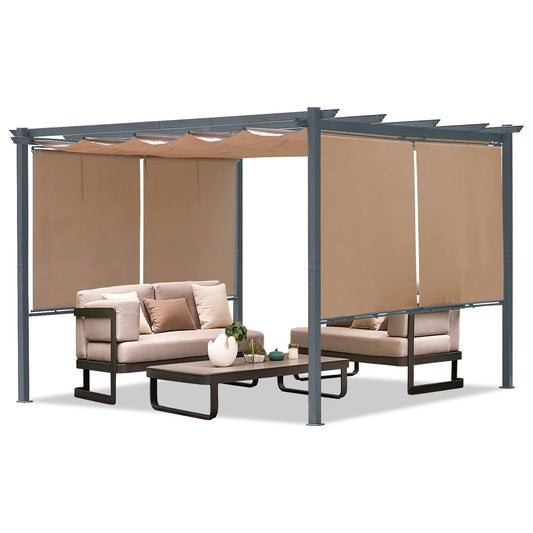
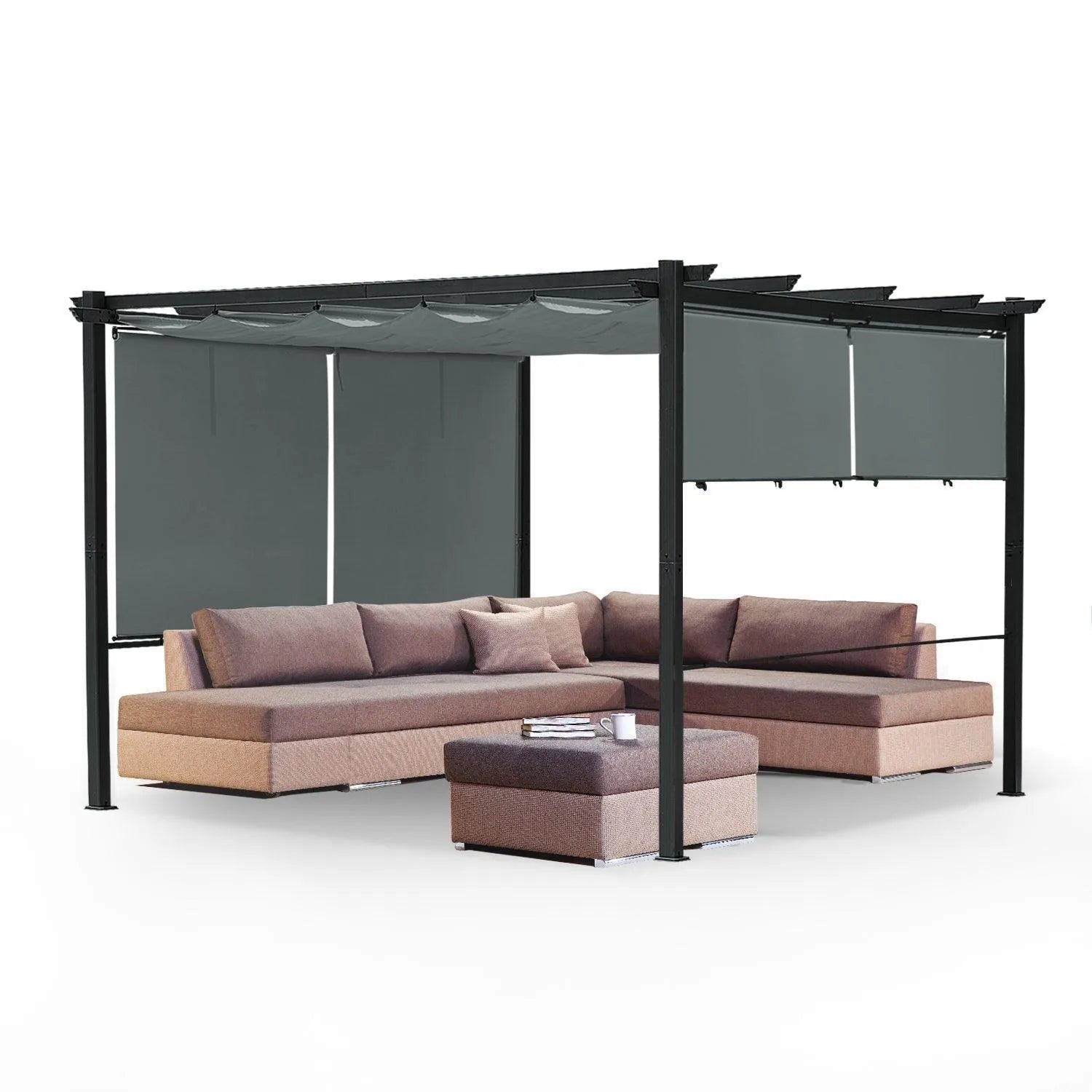
Aluminum pergolas achieve their 30+ year lifespan through fundamental material advantages. Unlike wood or vinyl, aluminum is completely rust and corrosion-proof—even in coastal environments where salt air aggressively attacks other materials. The powder-coated finish provides industrial-grade UV resistance that prevents fading, while the metal structure never rots, warps, splits, or attracts insects.
Structural strength matters beyond aesthetics. Aluminum's engineering allows for modern features like motorized louvered roofs, integrated LED lighting, ceiling fans, and retractable screens—technology that vinyl and wood simply cannot reliably support. In extreme climates, aluminum performs exceptionally: it handles desert heat exceeding 120°F without degradation, supports heavy snow loads that would collapse vinyl, and stands up to coastal salt air that destroys wood within a decade.
The specific lifespan of 30+ years with virtually zero maintenance makes aluminum the only material genuinely suited for saltwater environments and extreme weather zones.
Aluminum's Modern Advantages
Louvered aluminum pergolas represent the pinnacle of outdoor structure technology, offering weather control impossible with static materials. Adjustable louvers provide rain protection when closed and ventilation when open—functionality that requires aluminum's strength and precision engineering. The clean, contemporary aesthetic fits modern home designs, while powder-coated finishes offer extensive color options beyond vinyl's limited palette.
Aluminum's lightweight nature simplifies installation without sacrificing strength. Unlike heavy steel, it doesn't require reinforced foundations, yet maintains superior structural integrity compared to hollow vinyl posts. For wall-mounted pergolas, aluminum's strength-to-weight ratio allows secure attachment without stressing your home's structure.
The trade-off? Higher upfront investment ranging from $8,000-$20,000 depending on size and features. Metal surfaces can also feel hot to the touch in direct sun, unlike wood's insulating properties. However, when calculating total ownership cost over 30 years including maintenance and potential replacement, aluminum delivers the lowest per-year expense and best performance-to-price ratio for homeowners prioritizing long-term value and modern functionality.
Vinyl Pergolas: The Low-Maintenance Middle Ground
Vinyl's Durability Profile
Vinyl pergolas occupy the middle position in material rankings with a 15-25 year lifespan requiring minimal maintenance. The synthetic material resists rot and insects effectively, and unlike wood, it never requires painting, staining, or sealing—an annual power wash typically suffices for cleaning. This makes vinyl appealing for homeowners wanting lower maintenance than wood without aluminum's premium price point.
However, "second place in durability rankings" comes with significant limitations that become apparent over time. Vinyl's performance depends heavily on climate, with many structures failing to reach their theoretical 25-year maximum lifespan due to environmental stress.
Where Vinyl Falls Short
Temperature sensitivity represents vinyl's fundamental weakness. The material becomes brittle in extreme cold, making it prone to cracking during harsh winters. Conversely, intense heat causes warping and sagging—a serious issue in desert climates where summer temperatures exceed 120°F. We've documented vinyl pergolas in Phoenix and Las Vegas showing visible distortion after just 5-7 years.
Color options remain limited, typically restricted to white, beige, or tan. Despite UV resistance claims, fading occurs noticeably over 10-15 years, especially in sun-intense regions. The material simply cannot match aluminum's powder-coated finish durability.
Structural weakness prevents vinyl from supporting heavy accessories or technology integration. Heavy snow loads can cause collapse, and the hollow post construction lacks the rigidity for motorized features. The aesthetic appearance also trends toward "cheaper" compared to metal or natural wood, potentially impacting home value.
Climate warnings matter: vinyl is not recommended for desert climates with 120°F+ summers, heavy snow regions where structural integrity becomes critical, or coastal areas where UV degradation accelerates dramatically. At $4,000-$12,000, vinyl works best in moderate climates where budget is the primary concern and you want minimal maintenance without premium features or modern technology.
Wood Pergolas: Classic Beauty with High Commitment
Wood Material Options and Durability
Wood pergolas deliver unmatched natural aesthetic appeal, but material choice significantly impacts longevity. Cedar offers the longest lifespan at 10-15 years with proper maintenance, featuring natural weather resistance, pleasant aroma, and attractive reddish coloring. Pressure-treated pine costs less but lasts only 5-10 years and requires the most intensive maintenance schedule. Redwood and tropical hardwoods extend durability but at premium prices.
No synthetic material truly replicates wood's warm, organic appearance. For traditional or rustic design aesthetics where authenticity matters, wood remains unparalleled.
The Maintenance Reality
Here's the honest assessment: wood demands hands-on ownership. Every 2-3 years, you'll need to clean, sand, and reseal or restain the entire structure—a process costing $200-500 in materials or $800-1,500 for professional service. Without this regular care, wood deteriorates rapidly through rot, mold, insect damage, and weathering.
Over a 15-year lifespan, expect to invest $1,000-$3,750 in maintenance alone, not counting time and labor. Wood splinters as it ages, structural checking (cracking along the grain) occurs naturally, and regular damage inspections become necessary to catch problems before they compromise safety.
When Wood Makes Sense
Despite maintenance demands, wood makes sense in specific scenarios. Traditional or rustic design aesthetics where authenticity is non-negotiable often require natural materials. Dry climates with lower humidity significantly reduce rot risk, extending lifespan with less maintenance. DIY enthusiasts who genuinely enjoy hands-on projects may appreciate the restoration and care process.
Wood also integrates beautifully with climbing vines and plants, as the natural material supports growth better than synthetic alternatives. If your landscape design specifically requires natural wood characteristics, factor maintenance into your decision consciously.
At $3,000-$10,000 depending on wood type and size, the upfront cost seems reasonable—but remember the ongoing commitment. Choose wood only if you genuinely enjoy maintenance work or your design specifically requires natural materials that justify the extra effort.
Material Comparison: Making Your Decision
|
Factor |
Aluminum |
Vinyl |
Wood |
|
Lifespan |
30+ years |
15-25 years |
5-15 years |
|
Maintenance |
Minimal (hose rinse) |
Low (annual wash) |
High (bi-annual treatment) |
|
Durability Rating |
9.5/10 |
7/10 |
5/10 |
|
Coastal Suitable |
✓ Excellent |
✗ Poor |
✗ Poor |
|
Tech Integration |
✓ Full support |
Limited |
✗ None |
|
Aesthetic Appeal |
Modern/Clean |
Formal/Basic |
Rustic/Natural |
|
Upfront Cost |
$$$ |
$$ |
$ - $$ |
|
10-Year Total Cost |
$$ |
- $ |
$$$ |
Quick Decision Framework
Choose Aluminum if:
- You want a lifetime investment with minimal hassle
- You live in harsh climates (coastal, desert, heavy snow)
- You value modern features like pergolas with louvered roofs
- You prioritize lowest long-term maintenance
Choose Vinyl if:
- Budget is your primary concern
- You live in moderate climates without temperature extremes
- You want simple, maintenance-free functionality
- Premium features aren't important to your needs
Choose Wood if:
- Natural aesthetic is a non-negotiable priority
- You genuinely enjoy hands-on maintenance projects
- You're incorporating climbing plants into your design
- Traditional architecture requires authentic materials
Climate-Specific Material Recommendations
Desert/Southwest (Arizona, Nevada, Southern California): Aluminum is essential—vinyl degrades rapidly in 120°F+ heat causing warping within years, while wood dries out and develops extensive cracking. Only aluminum maintains structural integrity and appearance in extreme desert conditions.
Coastal Regions (Florida, California coast, Northeast shore): Aluminum only—salt air destroys vinyl through accelerated UV degradation and corrodes wood within 5-10 years even with aggressive maintenance. Aluminum's corrosion resistance makes it the sole viable long-term option.
Humid/Rainy Climates (Pacific Northwest, Southeast): Aluminum remains the first choice; vinyl is acceptable but expect accelerated weathering; wood requires aggressive maintenance schedules to combat constant moisture, mold, and rot.
Cold/Snow Regions (Mountain states, Upper Midwest): Aluminum handles snow loads best without structural compromise; vinyl becomes dangerously brittle in sub-zero temperatures; wood traps moisture leading to freeze-thaw damage and accelerated deterioration.
Moderate Climates (Mid-Atlantic, Central US): All three materials remain viable options—make your choice based on budget priorities and aesthetic preferences rather than survival necessity.
Frequently Asked Questions
Q: How tall should a pergola be for optimal functionality?
Pergola height impacts both aesthetics and functionality. Most structures range from 8-12 feet, with 9-10 feet ideal for standard residential applications. Height affects material stress—taller structures experience greater wind loads regardless of material choice. For comprehensive guidance on selecting the perfect height for your space and climate, read our detailed pergola height guide.
Q: How do I clean and maintain an aluminum pergola?
Aluminum's minimal maintenance requirement is a key durability advantage. Typically, an annual rinse with a garden hose removes dust and debris. For deeper cleaning, mild soap and water with a soft brush handle tougher buildup without damaging the powder-coated finish. Unlike wood that needs regular sealing or vinyl that stains easily, aluminum maintains its appearance with minimal effort. Learn detailed cleaning techniques in our aluminum pergola maintenance guide.
Q: How much does a louvered pergola cost?
Louvered pergolas represent premium investment due to their adjustable roof technology and superior materials. Expect costs ranging from $12,000-$25,000 depending on size, features, and installation complexity. While higher than basic wood structures, louvered systems deliver weather control and decades of maintenance-free performance. The investment pays off through longevity and functionality. For complete pricing breakdowns and cost factors, explore our louvered pergola cost analysis.
Q: What are some creative pergola design ideas?
Material choice influences but doesn't limit design creativity. Aluminum's strength supports modern features like integrated lighting, retractable screens, and smart home connectivity. Wood suits traditional or rustic themes with natural climbing plants. Even with durable materials, you can create stunning seasonal themes and functional designs. Discover innovative concepts in our pergola design inspiration guide that work across material types.
Q: Why are pergolas so popular for outdoor living spaces?
Pergolas have surged in popularity because modern materials and engineering transformed them from decorative accents into functional outdoor rooms. Durable aluminum construction, weather-resistant designs, and technology integration make them practical year-round investments. Families appreciate the defined outdoor space, shade control, and entertainment value. Learn about the factors driving this outdoor living trend in our article on why pergolas dominate American backyards.
Invest in Performance for Long-Term Value
When comparing pergola materials, durability should guide your primary consideration—not just upfront cost. The hierarchy stands clear through real-world data: aluminum delivers unmatched longevity, vinyl offers a practical middle ground, and wood requires committed maintenance. For most homeowners, aluminum's combination of lifetime durability, modern features, and minimal maintenance makes it the clear best pergola material choice—especially in challenging climates.
The right material transforms your outdoor space from a seasonal feature into a year-round living area you'll enjoy for decades. Your pergola represents a 20-30 year investment in your home and family's outdoor lifestyle. Choose the material that will still look great and function perfectly when your kids are grown, when you're ready to sell your home, or when you're simply enjoying your backyard oasis year after year.
Ready to explore premium options that last? Browse our pergola collection to discover engineered aluminum solutions designed for American families who value lasting quality and modern functionality.

