


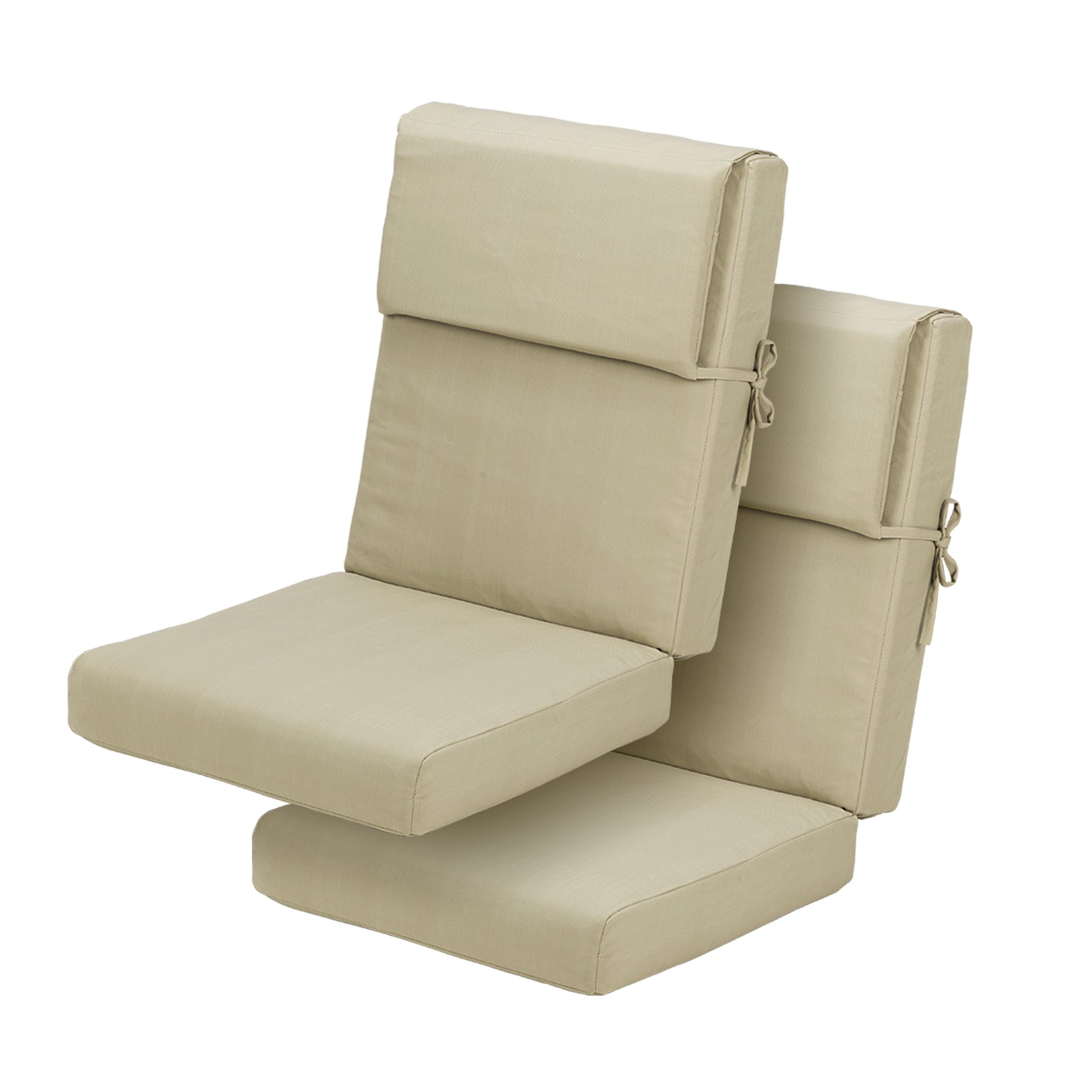




Ordering the wrong size is the most expensive mistake you can make when replacing outdoor cushions. In most cases, the error happens before the measuring tape ever touches the furniture: people measure the old cushion instead of the frame, or they measure the outside of the frame instead of the inside. This guide walks through exactly how to measure for replacement outdoor cushions by furniture type, covers the seam-to-seam method for covers, and includes a pre-order checklist to catch errors before you buy.
To measure for replacement outdoor cushions, remove the old cushion and measure the inside width (left to right) and inside depth (front to back) of the furniture frame in inches. For cushion covers, measure seam-to-seam on the existing cushion instead. Always measure the frame rather than old cushions, which compress and shrink over time. Record width, depth, and thickness before ordering.

What You Need Before You Start
Knowing how to measure for outdoor cushions correctly starts with the right tools and one critical distinction before you touch the tape measure. Skipping this step is why so many replacement cushion orders arrive with the wrong fit.
Tools and Supplies
A rigid tape measure gives the most accurate readings for flat seat surfaces. Flexible cloth or plastic tape measures work better for curved or rounded furniture frames. Have a pen and paper or your phone ready to write down each measurement immediately. An optional but helpful addition is painter's tape to mark the seat deck edges on tricky frames, and a camera to photograph any unusual cushion shapes before you remove them.
Measuring for Cushions vs. Measuring for Covers: The Key Difference
This is the distinction that most guides gloss over, and it is the source of the majority of wrong-size orders. The two situations require measuring different things entirely.
|
Situation |
What to Measure |
Where to Measure |
Method |
|---|---|---|---|
|
Replacement cushion |
Furniture frame |
Inside the frame opening |
Measure after removing old cushion |
|
Replacement cover |
Existing cushion |
Seam to seam on flat surface |
Measure the cushion, not the frame |
If you are buying a replacement cushion, the old cushion is not your reference point. It has compressed, shifted, and possibly shrunk. The furniture frame is the only accurate measurement source. If you are buying a replacement cover for a cushion that is still structurally sound, measure the cushion itself seam to seam on a flat surface.
How to Measure for Replacement Outdoor Cushions by Furniture Type
Learning how to measure for replacement outdoor cushions requires knowing that each furniture type has its own measurement priorities and common failure points. The steps below cover every major patio and outdoor furniture category. Knowing which dimensions matter most for each type prevents the most frequent ordering errors.
Dining Chair Cushions
Remove the existing cushion and set it aside. Measure the inside width of the seat from left to right across the widest point, which is usually at the front of the seat. If the seat tapers, measure the front width and the back width separately and record both. Measure the inside depth from the front edge of the seat frame to the back frame. Standard dining seat cushions are 2 to 3 inches thick, which keeps the seated position upright and comfortable for eating.
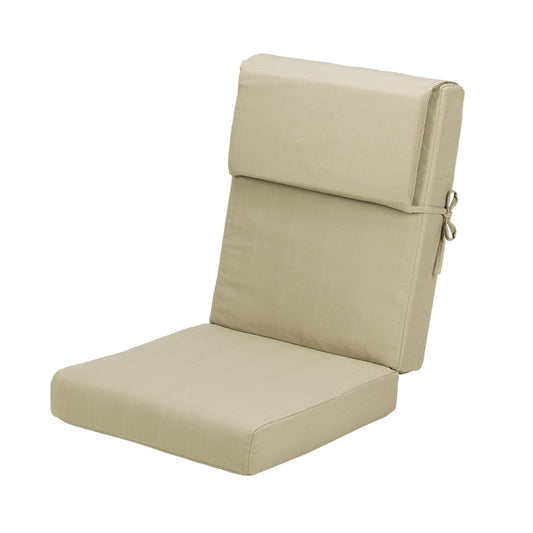
For a back cushion, measure the inside back width at the shoulder level where the cushion will rest. Measure the back height from the top of the seat deck to the top of the back frame, then subtract the thickness of the seat cushion from that number. This step is critical: if you skip the subtraction, the back cushion will extend above the top of the chair frame.

Lounge and Deep Seat Cushions
Deep seat outdoor furniture is designed for a more reclined, relaxed position and uses seat dimensions that are significantly larger than dining chairs. The seat depth is the measurement most people get wrong on deep seat furniture. Do not assume the depth based on how the chair looks. Measure it directly: most deep seat chairs range from 26 to 32 inches front to back, compared to 14 to 18 inches for a standard dining chair. Measure the inside width from left to right. For the back cushion, measure the inside back width and the inside back height from the top of the seat deck upward.
Bench and Loveseat Cushions
Measure the full inside width of the bench or loveseat seat. If the piece uses multiple cushion sections rather than one long cushion, divide the total inside width by the number of sections to find the width per cushion. Check whether armrests are positioned within the seating area: a standard rectangular cushion will not fit correctly around interior armrests, and you will need a cushion with cutouts or notches at the arm positions. Bench cushions typically run 16 to 20 inches deep and 2 to 4 inches thick.
Chaise Lounge Cushions
Chaise cushions have two critical length measurements rather than one. The total length runs from the head of the cushion to the foot and is usually over 72 inches. If the chaise has a hinge or fold point, measure from the top of the cushion to the hinge as one segment, then from the hinge to the foot as the second segment. Record both segments separately. Width is measured by standing at the foot of the chaise and measuring from left corner to right corner. Thickness on a chaise cushion is typically 3 to 5 inches and is always measured top to bottom when the cushion is not compressed.
Porch Swing Cushions
The width of a porch swing cushion equals the usable seating length of the swing, measured from inside arm to inside arm. Depth is typically 18 to 20 inches from front to back. If the swing includes a back section, measure the back height from the seat deck to the top of the back frame. Back cushions on porch swings are often hinged or connected to the seat cushion, so note whether you need a combined cushion or two separate pieces before ordering.

Standard Outdoor Cushion Sizes by Furniture Type
These ranges represent typical dimensions for standard US residential outdoor furniture. Knowing how to measure for outdoor cushions is only half the process; knowing whether your measurements are within a normal range is equally important. If your numbers fall significantly outside these ranges, double-check that you measured inside the frame rather than outside. Measurements well beyond these ranges usually indicate either a measurement error or a piece that requires a custom order.
|
Furniture Type |
Standard Width |
Standard Depth / Length |
Typical Thickness |
|---|---|---|---|
|
Dining chair seat |
15-20 in |
14-18 in |
2-3 in |
|
Lounge chair seat |
22-26 in |
20-24 in |
4-5 in |
|
Deep seat chair |
26-32 in |
26-32 in |
5-7 in |
|
Loveseat per cushion |
20-26 in |
22-26 in |
4-6 in |
|
Sofa seat per cushion |
22-26 in |
22-26 in |
4-6 in |
|
Bench (full width) |
36-60 in |
16-20 in |
2-4 in |
|
Chaise lounge |
22-26 in |
72-84 in (total length) |
3-5 in |
|
Porch swing |
Match swing width |
18-20 in |
3-4 in |
Dining and lounge cushions fall at opposite ends of the thickness range for a reason: dining cushions keep the seated height consistent with the table surface, while lounge cushions prioritize a sink-in comfort that works for extended relaxation. Deep seat furniture uses the thickest cushions because the deeper frame is designed to hold more fill.
Once you have confirmed your measurements fall within a standard range, browse Aoodor outdoor cushions to find replacement options by size and style.
How to Measure Cushions for Covers
How to measure cushions for covers follows different rules than measuring for replacement cushions. The frame is no longer your reference point. Instead, the existing cushion itself is what you measure, and the method is seam-to-seam rather than inside-frame.
The Seam-to-Seam Method
Place the cushion flat on a hard, clean surface. Smooth out any wrinkles or bunching without stretching the fabric. Measure the width from the seam on the left side to the seam on the right side, across the widest point. Do not measure over the middle of the cushion where the fill creates a crown. Measure the depth from the front seam to the back seam. For thickness, press the cushion gently to find its natural resting state and measure top to bottom without compression. Avoid including any piping or welting in the measurement: the seam itself is the boundary.
For cushions that are structurally sound but dirty or stained, a good clean may extend their life before you need covers. See How to Clean Outdoor Cushions Without Removable Covers for guidance before deciding whether replacement is necessary.
What to Do When Your Cushion Has Shrunk or Deformed
Outdoor cushions that have been in use for several seasons often compress and narrow slightly from their original dimensions. If the cushion has visibly flattened or the fabric looks slack, the seam-to-seam measurement will produce a smaller number than the cushion's original size. In this case, add 0.5 inch to the width and depth measurements before ordering a cover. If the deformation is significant, measure the inside of the furniture frame instead and treat the order as a cushion replacement rather than a cover purchase. A cover ordered to match a compressed cushion will fit the current state of the fill but will look loose once the fill is replaced.

5 Measuring Mistakes That Lead to Wrong-Size Orders
Understanding how to measure for replacement outdoor cushions correctly means knowing what not to do as much as what to do. These five errors account for the vast majority of replacement cushion fit problems. Each one is avoidable with a small adjustment in technique.
Mistake 1: Measuring the Old Cushion Instead of the Frame
The most common error. Old outdoor cushions compress, warp, and shrink in ways that are often invisible until you compare them side by side with the original frame opening. The cushion that once fit perfectly may now measure 1 to 2 inches narrower or shorter than the frame interior. Always remove the old cushion first and measure the inside of the frame directly.
Mistake 2: Measuring the Outside of the Frame Instead of the Inside
The outside dimensions of a furniture frame include the frame material itself, which adds 1 to 3 inches on each side depending on the furniture's construction. A cushion ordered to the outside frame measurement will arrive noticeably oversized and either force its way into the frame or bulge out around the edges. Measure only the interior opening where the cushion will actually sit.
Mistake 3: Skipping the Depth Measurement
Width gets measured first and remembered. Depth often gets written down as an afterthought or skipped entirely. A cushion that is the correct width but the wrong depth will either be too short and slide toward the front of the seat, or too long and bunch against the back frame. Both create a cushion that shifts during use. Depth is the second dimension you measure, every time, without exception.
Mistake 4: Ignoring Seat Taper
Many outdoor dining chairs and lounge chairs have seats that are wider at the front than at the back. If you measure only the front width and order a rectangular cushion to that size, the cushion will not sit cleanly in the frame: the back corners will either overhang or compress inward. When a seat tapers, measure both the front width and the back width. Provide both numbers when ordering.
Mistake 5: Forgetting to Subtract Seat Cushion Thickness from Back Height
When measuring the back height for a back cushion, the measurement runs from the top of the seat deck to the top of the back frame. The seat cushion occupies part of that space. If you order a back cushion to the full back height without subtracting the seat cushion thickness, the back cushion will extend above the top of the chair frame. Subtract the seat cushion thickness from the back height measurement before recording it.
Choosing the right material for your replacement cushions affects long-term fit as well as durability. See Sunbrella vs Olefin vs Polyester: How to Choose Patio Cushions for a breakdown of which fabrics hold their shape best over time.
What to Do If Your Size Is Non-Standard
Following every step on how to measure for replacement outdoor cushions correctly and still finding that your dimensions do not match any standard size in a catalog is more common than most guides acknowledge. It happens frequently with vintage furniture sets, discontinued brand collections, and custom-built outdoor pieces. Knowing the right response saves both time and money.

When to Round Up vs. Round Down
A cushion that is slightly smaller than the frame opening sits neatly without pressure. A cushion that is slightly larger than the opening will compress against the frame walls and feel tight. For seat cushions, rounding down 0.5 inch is generally the safer choice for a clean, tailored fit. For covers, round up 0.5 inch to ensure the cover slides onto the cushion without stretching the fabric. The exception is cushions with tie attachments or track systems that require a precise fit: in those cases, order to the exact measurement and do not round in either direction.
When a Custom Order Is the Right Answer
If any measurement falls more than 1.5 inches outside the standard ranges shown in the table above, a custom order is the more reliable path than trying to make a standard size work. Custom outdoor cushions are made to your exact specifications and typically have lead times of two to four weeks. Most specialty cushion retailers offer this option.
If your cushions are still in reasonable structural condition but have faded or developed mold, replacement may not be necessary yet. See Top Outdoor Cushion Materials: Best Rankings for 2025 to understand which materials hold up longest before needing replacement.
Pre-Order Checklist Before You Buy Replacement Cushions
Knowing how to measure for outdoor cushions is most useful when it translates into a consistent process before every order. Run through these checks before submitting any replacement cushion or cover order. Each item corresponds to one of the most common ordering errors.
- Measured inside the frame, not the outside or the old cushion.
- Recorded both front width and back width if the seat tapers.
- Measured seat depth (front to back), not just width.
- Chose thickness appropriate to furniture type (2 to 3 inches for dining, 4 to 7 inches for lounge and deep seat).
- If buying a cover: measured seam to seam on the existing cushion, not the frame.
- Subtracted seat cushion thickness from back height measurement before recording.
- Double-checked all measurements and photographed the frame before removing the old cushion.
Keeping a photo of the frame dimensions and a written record of all measurements also helps if you need to contact a retailer to confirm sizing before placing a large order.
Frequently Asked Questions
Quick answers to the questions homeowners ask most when measuring for outdoor cushion replacements.
Should I measure the old cushion or the furniture frame?
Measure the furniture frame. Old outdoor cushions compress and shrink over time, so their current dimensions are smaller than the frame opening they should fill. The exception is when ordering a cover for a cushion that is still structurally sound.
What if my measurements fall between two standard sizes?
Round down 0.5 inch for seat cushions to avoid a tight fit against the frame walls. Round up 0.5 inch for covers so the fabric slides on without stretching. If the gap is larger than 1 inch, consider a custom order.
How do I measure outdoor cushions for covers vs. replacement cushions?
For covers, measure the existing cushion seam to seam on a flat surface. For replacement cushions, measure inside the furniture frame after removing the old cushion. The two methods produce different numbers and serve different purposes.
What is the standard size for outdoor dining chair cushions?
Standard outdoor dining chair seat cushions typically measure 15 to 20 inches wide, 14 to 18 inches deep, and 2 to 3 inches thick. Back cushions vary more widely and should always be measured from the specific chair frame.
How much bigger should a cushion cover be than the cushion?
A cover ordered 0.5 inch larger than the seam-to-seam cushion measurement fits cleanly without stretching. Going more than 1 inch larger creates visible fabric bunching that worsens over time with use.
Do outdoor cushions come in standard sizes?
Most dining chair and bench cushions follow standard ranges that most retailers stock. Deep seat, chaise, and custom outdoor furniture often fall outside standard ranges and may require custom orders. For material guidance once you have your measurements confirmed, see Best Color Ideas for Outdoor Furniture Cushions.
Ready to Order Your Replacement Cushions?
Accurate measurements take ten minutes and prevent weeks of waiting for a return and reorder. The most important rules: measure the frame, not the old cushion; record width, depth, and thickness for every piece; and use seam-to-seam only when ordering covers. With the right numbers in hand, finding the correct replacement is straightforward.
Browse the full Aoodor outdoor cushion collection to find replacement cushions by size, style, and material, with free shipping on all orders.
