






To remove mildew from outdoor cushions without bleach, dry-brush loose spores outdoors first, then apply a solution of equal parts white vinegar and water, let it soak 15 to 20 minutes, scrub gently with a soft-bristle brush, rinse thoroughly, and air-dry in direct sunlight. For tougher mildew, escalate to a baking soda paste or a diluted hydrogen peroxide solution.
Finding mildew on your outdoor cushions is one of those problems that needs to be dealt with today, not next weekend. The good news is that bleach is rarely the right tool for the job. Most cases respond well to household solutions like white vinegar, baking soda, and hydrogen peroxide, which are gentler on fabric coatings and safer around plants and pets. This guide covers how to identify what you are dealing with, four bleach-free methods matched to severity, and how to treat different fabric types safely.

Mildew vs. Mold on Outdoor Cushions: Which Do You Have?
Before applying any cleaning solution, a quick visual inspection tells you what you are actually dealing with and how aggressive your approach needs to be.
|
|
Mildew |
Mold |
|---|---|---|
|
Appearance |
Flat, gray or white surface patches |
Fuzzy, raised, green or black spots |
|
Depth |
Surface-level only |
Penetrates into foam core |
|
Smell |
Faint musty odor |
Stronger, earthy, persistent |
|
DIY Treatable? |
Usually yes |
Repeat treatment or pro help needed |
|
Urgency |
Moderate |
High |
Flat, grayish spots that come off with a dry brush are surface mildew. Raised, fuzzy, green or black spots with a persistent smell may have penetrated deeper into the foam core and could require repeated treatment or professional help. The methods in this guide work for both, but mold may need multiple rounds.
Before You Start: Supplies and the Critical First Step
Gathering the right materials before you begin and following the correct sequence makes the difference between mildew that lifts cleanly and mildew that gets spread further into the fabric.
Supplies for All Bleach-Free Methods
Have everything ready before you start to avoid leaving wet cushions sitting while you search for supplies:
- Soft-bristle brush (not wire or stiff nylon)
- Bucket, spray bottle, garden hose with spray nozzle
- White distilled vinegar, baking soda, mild dish soap
- Rubber gloves and a microfiber cloth for blotting
- 3 percent hydrogen peroxide (for Method 4 only; available at any drugstore)
Do not use abrasive scrubbing pads at any stage. They damage the weave of outdoor performance fabrics and strip protective coatings that slow future mildew growth.

Dry-Brush Spores Before Wetting the Fabric
This step is skipped by most people and it is the most important one. Take the cushions outdoors to a paved surface or lay them on a tarp away from the lawn. Use a soft-bristle brush to sweep the mildew off the fabric surface in dry strokes before introducing any moisture. Water spreads mildew spores across a wider surface area and pushes them deeper into the fabric. Dry-brushing first removes the bulk of surface growth so the cleaning solution works on residual staining rather than active spore colonies. Dispose of the loosened debris away from the lawn and your garden.
4 Bleach-Free Methods to Remove Mildew from Outdoor Cushions
The four methods below are ordered from gentlest to strongest. Start with Method 1 for light mildew and escalate if the staining does not clear after one treatment.
|
Severity |
Best Method |
Solution Ratio |
Soak Time |
Safe On |
|---|---|---|---|---|
|
Light (faint spots, mild smell) |
White Vinegar Spray |
1:1 vinegar + water |
15 to 20 min |
All outdoor fabric types |
|
Moderate (visible patches, musty odor) |
Baking Soda Paste |
2 parts baking soda + 1 part water |
30 to 60 min |
All outdoor fabric types |
|
Moderate to Severe |
Vinegar + Baking Soda Combination |
Vinegar spray first, then baking soda paste |
30 to 45 min combined |
All outdoor fabric types |
|
Severe (widespread, deep staining) |
Hydrogen Peroxide Solution |
1 part H2O2 + 2 parts water |
10 to 15 min |
Spot-test first; fading risk on dark fabrics |
Start with the gentlest method appropriate for your mildew level. Most light-to-moderate outdoor cushion mildew responds fully to Method 1 or 2. Reserve hydrogen peroxide for severe cases where vinegar and baking soda have not cleared the staining after a full treatment cycle.
Method 1: White Vinegar Spray (Best for Light Mildew)
White vinegar is a mild acid that kills the fungi responsible for outdoor fabric mildew and is safe on all fabric types including Sunbrella, Olefin, and polyester. Fill a spray bottle with equal parts distilled white vinegar and water. After dry-brushing the cushion, spray the solution generously over all affected areas until the fabric is thoroughly wet but not dripping. Let it soak for 15 to 20 minutes without scrubbing during this time, allowing the acid to break down the growth at the surface level. After soaking, scrub in straight lines along the fabric weave using a soft-bristle brush. Rinse thoroughly with a garden hose until the water running off is completely clear, then air-dry standing upright in direct sunlight. Note that vinegar has a strong smell during application that disappears completely once the fabric dries.
Method 2: Baking Soda Paste (Best for Moderate Mildew)
Baking soda acts as a mild abrasive and odor absorber that is particularly effective on moderate patches with visible staining and a persistent musty smell. Mix two parts baking soda with one part water to form a thick paste. After dry-brushing, apply the paste directly to all stained areas using a sponge or your gloved hand, pressing it into the fabric rather than just surface-coating it. Leave the paste on the fabric for a minimum of 30 minutes, or up to one hour for stubborn patches. Scrub with a soft-bristle brush using straight strokes, rinse thoroughly until no white residue remains, and air-dry in direct sunlight.
Method 3: Vinegar and Baking Soda Combination (Most Effective Without Bleach)
Combining both agents in sequence is the most effective bleach-free approach for moderate to severe cases. The two are not mixed simultaneously because the combination neutralizes each other on contact. Instead, apply vinegar first and allow it to work, then apply the baking soda paste to the dampened fabric to build on the initial acid treatment.
After dry-brushing, spray the vinegar solution over the entire affected area and let it soak for 15 minutes. Without rinsing, apply the baking soda paste directly over the vinegar-dampened areas. The mild fizzing reaction you see is normal. Allow the combined treatment to sit for 30 minutes, then scrub with a soft-bristle brush and rinse thoroughly.
Method 4: Hydrogen Peroxide Solution (For Severe Cases)
Hydrogen peroxide is more powerful than vinegar against stubborn or widespread staining. Mix one part 3 percent hydrogen peroxide with two parts water in a spray bottle. Before applying broadly, spot-test in a hidden area and wait 10 minutes to check for color change. On light-colored fabrics and performance acrylics like Sunbrella and Olefin, hydrogen peroxide is generally safe at this dilution.
On dark-colored polyester or canvas fabrics, the fading risk is significant enough to make this method inadvisable. Apply to affected areas, let sit for 10 to 15 minutes, scrub with a soft-bristle brush, and rinse thoroughly. Do not allow it to dry on the fabric before rinsing.

Bleach-Free Mildew Removal by Fabric Type
Outdoor cushion fabrics are not interchangeable in how they respond to cleaning solutions. Before treating the full cushion, always check the care label and use the fabric-specific guidance below.
|
Fabric Type |
Safe Bleach-Free Methods |
Avoid |
Key Note |
|---|---|---|---|
|
Sunbrella (solution-dyed acrylic) |
Vinegar, baking soda, diluted H2O2 |
Undiluted H2O2 on dark colors |
Highly mildew-resistant; mildew grows on surface dirt, not the fiber. Rinse extremely thoroughly after any treatment. |
|
Olefin |
Vinegar, baking soda |
Strong undiluted acids |
Naturally mold-resistant. Rinse soap and vinegar very thoroughly to prevent residue buildup that attracts more dirt. |
|
Polyester |
Vinegar, baking soda |
Hydrogen peroxide (fading risk) |
Most vulnerable fabric to mildew penetration. Treat quickly; may need two rounds of the vinegar method for persistent staining. |
|
Canvas / Cotton Blend |
Vinegar, baking soda (test first) |
H2O2 without spot-test, bleach |
Most porous fabric; mildew penetrates deepest. May require repeat treatment. Consider upgrading to synthetic fabric if the problem keeps recurring. |
Sunbrella and Olefin are the most forgiving fabrics for bleach-free mildew treatment. Polyester and canvas blends are the most vulnerable to mildew penetration and the most likely to require repeat treatment or show residual staining after cleaning.
Why Sunlight Is the Final Step, Not Optional
Every cleaning method in this guide ends with air-drying in direct sunlight, and this is not simply about drying the fabric. UV light is a natural fungicide that kills residual spores on the surface. A cushion dried in a shaded garage or laid flat indoors has been cleaned of visible growth but may still carry live spores that will re-establish a colony within days. Direct sunlight drying is what completes the removal cycle.
How to Dry Correctly After Mildew Treatment
- Stand cushions on their edges rather than laying them flat so that air circulates on both sides and water drains from the foam core rather than pooling.
- Place in direct sun for a minimum of 3 to 4 hours, flipping once so both sides receive UV exposure.
- Press the center of each cushion firmly with your palm before bringing it inside. Any coolness or resistance in the foam core means it is not yet fully dry. A cushion put back on furniture with a damp core will develop new mildew within 24 to 48 hours regardless of how thoroughly you cleaned the surface.

After Cleaning: Re-Treatment to Prevent Mildew Returning
Cleaning removes the growth and the surface residue that feeds it, but it also strips some of the factory-applied water repellency from the fabric. Without re-treatment, freshly cleaned cushions are more porous than before and can develop new colonies more quickly when exposed to humidity.
Apply a Fabric Protector Spray After Every Treatment
Once the cushions are completely dry after cleaning and sunlight drying, apply a fabric protector spray rated for outdoor textiles such as 303 Fabric Guard or Scotchgard Outdoor Sun and Water Shield. These products create a hydrophobic coating that causes water and moisture to bead rather than absorb, directly reducing the damp conditions that fungal growth needs to establish. Spray evenly across the full cushion surface in a well-ventilated area, allow the recommended cure time, and reapply at least once per season and after every thorough cleaning.
Daily Habits That Prevent Mildew from Coming Back
Prevention is significantly less effort than treatment. Build these habits into your patio routine:
- Stand cushions on their edges after rain so water drains away from the foam core rather than pooling.
- Brush off pollen and leaf debris regularly since organic matter is the primary food source for fungal growth.
- Never stack wet cushions; lean them against a wall instead to allow airflow between layers.
- Bring cushions inside or into a deck box during rain periods longer than two consecutive days.
- Store cushions clean and completely dry at the end of the season.
FAQ: Removing Mildew from Outdoor Cushions Without Bleach
Does vinegar really kill mildew on outdoor cushions?
Yes. White vinegar is a mild acid that kills most outdoor fabric fungi on contact and is safe on all fabric types including Sunbrella and Olefin. Rinse thoroughly after treatment to prevent soap residue from feeding future growth.
Can I use baking soda alone to remove mildew from outdoor cushions?
Yes, baking soda paste is effective on moderate cases and particularly good at eliminating the musty odor that lingers after cleaning. For best results, combine it with a vinegar pre-treatment rather than relying on baking soda alone.
How long should I let vinegar sit on mildew?
Soak for 15 to 20 minutes for light cases, or up to 30 minutes for moderate ones. Do not let it dry completely on the fabric before scrubbing, as dried vinegar residue is harder to rinse out fully.
What if mildew stains remain after cleaning?
- Dry completely in direct sunlight first. Some residual discoloration is dead spore staining that UV exposure will fade naturally.
- If staining still persists after a full sun-dry cycle, repeat with the vinegar and baking soda combination method.
When should I replace cushions instead of cleaning them?
Replace cushions when the foam core carries odor that persists after multiple cleaning treatments, when fabric shows visible deterioration that cleaning cannot reverse, or when foam no longer springs back after pressing.
Clean Mildew Off Your Outdoor Cushions Today
Removing mildew from outdoor cushions without bleach is straightforward when you match the right method to the severity of the problem. White vinegar or a baking soda paste handles light to moderate cases. The combination method handles tougher growth. Sunlight drying finishes the job at the spore level. Apply fabric protector after every treatment and develop the daily habits that prevent re-establishment.
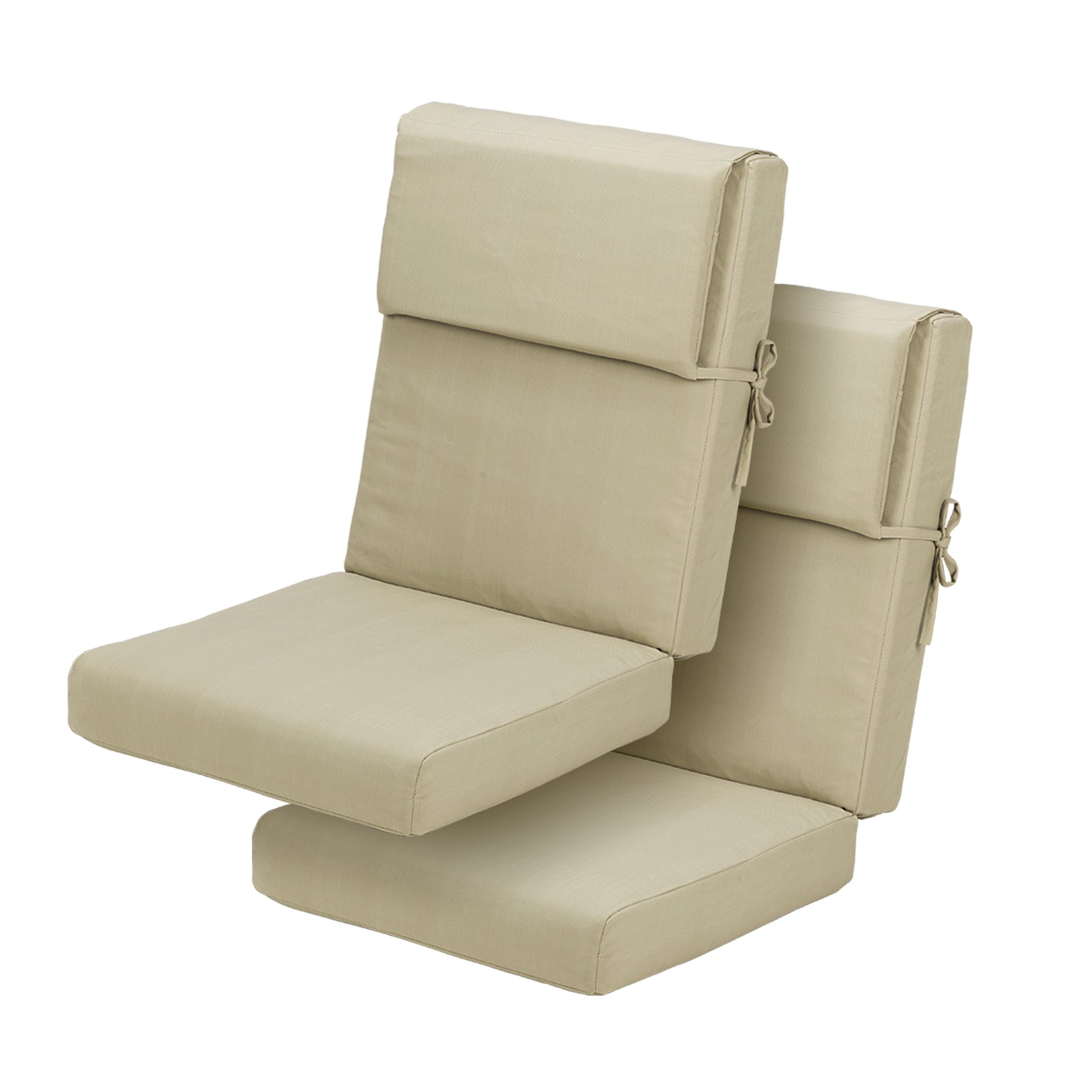
If your cushions have reached the point where cleaning is no longer restoring them, browse Aoodor's outdoor cushion collection for mildew-resistant options with quick-dry foam and UV-resistant fabrics.

