






Key Takeaways
- PSF rating is everything — look for ≥ 20 PSF for most climates; 30+ PSF for heavy snow zones
- Steeper roof pitch = faster snow shedding — flat roofs accumulate dangerous weight
- Steel or thick-wall aluminum frames outperform lightweight aluminum in heavy snow
- Anchoring is non-negotiable — concrete anchor kits are the gold standard for winter use
- Always remove snow after each storm — never let accumulation exceed your gazebo's rated capacity
Browse Aoodor's full lineup: Hardtop Gazebos | All Gazebos | Gazebo Roof Tops

Introduction
Picture this: you wake up after a heavy overnight snowstorm and find your backyard gazebo crumpled under a foot of wet snow. It's a scenario that plays out across the northern US every winter — and almost always because the wrong structure was chosen for the climate.
Not every hardtop gazebo is engineered to handle serious snowfall. The single most important number you need to know is the PSF (pounds per square foot) snow load rating. That spec tells you exactly how much weight a gazebo's roof can bear before it becomes a liability.
This guide gives you a spec-driven comparison of the best hardtop gazebo for snow load, plus a practical buying guide built for American families who want an outdoor space that survives winter — not one they have to dismantle every October.
What Is Snow Load and Why It Matters for Gazebos
Snow Load Defined
Snow load is the downward force that accumulated snow places on a structure, measured in pounds per square foot (PSF) — or kilograms per square meter (kg/m²) in metric terms. Fresh powdery snow can weigh as little as 3 PSF per foot of depth, while wet, packed snow tops out near 20 PSF per foot. That adds up fast.
Regional requirements vary significantly. Light snow climates (Mid-Atlantic, Pacific Northwest) typically see loads under 20 PSF. Northern US states and Canada commonly fall in the 20–30 PSF range. Mountain regions and the snow belt can push 40 PSF and beyond. You can check your local requirements against the ASCE 7 Ground Snow Load Map or your local building authority's guidelines.
Why Roof Pitch and Frame Material Amplify or Reduce Risk
Roof pitch is a natural ally in snow-heavy climates. A steeper pitch — anything above 15 degrees — causes snow to slide off before it can accumulate, dramatically reducing the static load on the structure. Flat or near-flat roofs trap snow, and weight builds quickly.
Frame material is equally important. Galvanized steel delivers the highest load resistance, while thick-wall powder-coated aluminum offers a strong, corrosion-resistant middle ground. Thin-gauge aluminum is best reserved for mild climates only.
Anchor systems also play a role. A properly anchored gazebo distributes load forces down through the posts into the ground, preventing lateral buckling under combined snow and wind stress.
Table 1: Snow Load Rating Guide
|
Snow Load Level |
PSF Range |
kg/m² |
Recommended For |
|
Light |
15–20 PSF |
73–97 kg/m² |
Mild winters (South/West) |
|
Moderate |
20–30 PSF |
97–146 kg/m² |
Northern US / Canada |
|
Heavy/Extreme |
30+ PSF |
146+ kg/m² |
Mountain / snow belt regions |
Key Specs to Check Before You Buy
Snow Load Rating (PSF)
Always verify the manufacturer's stated PSF — marketing copy has a habit of overstating structural claims. Look for documentation in the product spec sheet, not just a headline number. As a baseline, never go below 20 PSF for general US use. If you live in a heavy snow region, 30 PSF should be your hard minimum.
Wind Resistance
Snow and wind almost always arrive together. Cross-reference both ratings when evaluating a gazebo. A good all-season target is 50–90 mph. If your location experiences strong winter storms, prioritize structures rated at 90+ mph. A high PSF rating means little if a gust topples the frame mid-storm.
Frame Construction
Powder-coated aluminum resists rust and handles moderate loads well. Galvanized steel is heavier but significantly stronger under extreme weight. Pay attention to wall thickness — 1.2 mm to 1.5 mm aluminum tubing is a meaningful quality step up from the 0.8 mm stock found in budget models.
Anchoring & Foundation Compatibility
Ground spikes work for temporary or light-use setups. For year-round structures in snow climates, concrete anchor kits are essential. Some gazebos also offer deck-mount hardware. Proper anchoring keeps posts from shifting under compression loads and helps the entire frame work as a unified system.

Table 2: Spec Comparison Checklist
|
Spec |
Minimum (General) |
Recommended (Heavy Snow) |
|
Snow Load |
15 PSF |
≥ 30 PSF |
|
Wind Speed |
50 mph |
≥ 90 mph |
|
Frame Material |
Aluminum |
Steel or thick-wall aluminum |
|
Anchor System |
Ground spikes |
Concrete anchor kit |
|
Roof Pitch |
Flat |
≥ 15° pitch |
Best Hardtop Gazebos for Snow Load — Top Picks
These picks are ranked by snow load spec and structural performance, not brand popularity. All specs should be verified against current product listings.
Shop the full hardtop gazebo collection at Aoodor to find current models and pricing.
Best Overall — Aoodor 12×10 ft Aluminum Hardtop Gazebo
Snow load: 20–25 PSF | Wind rating: 75 mph | Frame: Powder-coated thick-wall aluminum | Roof pitch: ~15°
This 12×10 ft model hits the sweet spot for most American families. The angled roof actively sheds snow rather than letting it pile up, and the powder-coated aluminum frame resists moisture and corrosion across multiple winters. It fits a standard backyard footprint comfortably and accommodates a dining set or lounge furniture underneath.
Best for: Families in northern US states with moderate annual snowfall.
Pros:
- Solid PSF rating for most climates
- Corrosion-resistant finish
- Spacious footprint for family use
Cons:
- Not ideal for 30+ PSF regions without added snow management
- Requires two people for assembly
View Hardtop Gazebos at Aoodor

Best for Extreme Snow (30+ PSF) — Aoodor Heavy-Duty Steel Frame Hardtop Gazebo
Snow load: 30+ PSF | Wind rating: 90+ mph | Frame: Galvanized steel with reinforced ridge beam | Roof pitch: ~20°+
When you're dealing with mountain snowfall or snow belt conditions, this is the build you need. The galvanized steel frame and reinforced central ridge beam are the key differentiators — they prevent the roof from bowing under sustained heavy loads. The steep pitch means snow sheds naturally, reducing manual removal frequency.
Best for: Homeowners in mountain regions, Midwest snow belt, or upper Canada.
Pros:
- Highest structural integrity in the lineup
- Natural snow-shedding pitch
- Handles wind + snow combo loads
Cons:
- Heavier — installation requires planning
- Higher price point

Best Budget Pick — Aoodor 10×10 ft Powder-Coated Aluminum Gazebo
Snow load: 15–20 PSF | Wind rating: 50–60 mph | Frame: Standard aluminum | Roof pitch: ~10°
An honest budget option for families in mild winter climates. This model keeps costs down with a lighter frame, so it's not the right call for anyone dealing with consistent heavy snowfall. In areas like the South, Pacific Northwest, or Mid-Atlantic, it performs well and offers great value.
Best for: Mild-winter climates; light occasional snowfall only.
Pros:
- Affordable entry point
- Easy assembly
- Good aesthetic for year-round mild climates
Cons:
- Not rated for heavy snow — manual clearing after every storm is essential
- Wind resistance is limited

Best for High Wind + Snow Combo — Aoodor Double Roof Galvanized Steel Gazebo
Snow load: 25–30 PSF | Wind rating: 90+ mph | Frame: Galvanized steel | Anchor: Concrete anchor kit included
Dual load ratings are what set this model apart. The double-layer roof design adds rigidity and insulation, while the galvanized steel frame handles the lateral forces that wind introduces. The included concrete anchor kit is a genuine plus — proper anchoring at purchase removes the most common failure point.
Best for: Exposed backyard locations, open plains, or lake/coastal properties where wind compounds snow risk.
Pros:
- Dual-rated for wind and snow
- Anchor kit included
- Double-layer roof adds structural integrity
Cons:
- Larger installation footprint
- Heavier components

Best Large-Format Pick — Aoodor 13×13 ft Heavy-Duty Hardtop Gazebo
Snow load: 25+ PSF | Wind rating: 75–90 mph | Frame: Thick-wall aluminum | Roof pitch: ~15°
Larger footprints create longer unsupported roof spans, which means load stress concentrates at the center ridge. This 13×13 model compensates with reinforced corner posts and a center-beam design that distributes weight more effectively. It's an excellent choice for families who need room for an outdoor kitchen, large dining table, or entertainment area — without sacrificing structural performance.
Best for: Larger backyards; families who want a full outdoor living space year-round.
Pros:
- Generous coverage area
- Reinforced load distribution design
- Strong visual presence
Cons:
- Larger ground footprint — measure carefully before purchasing
- May need additional anchoring at corners for extreme snow zones
View All Gazebos at Aoodorshop.com
How to Maintain Your Gazebo During Winter
A well-chosen gazebo still needs seasonal care. Proper maintenance extends its lifespan and keeps it performing within its rated specs.
Snow Removal Best Practices
Clear snow accumulation after every significant storm. Don't wait for multiple storms to stack up — wet snow in particular adds weight fast. Use a soft-bristle broom or foam-tipped roof rake to sweep snow off gently. Avoid metal rakes or sharp tools that can scratch polycarbonate roof panels or damage the frame's protective coating.
Never climb onto the structure to remove snow. Brush from the edges inward and let it fall naturally.
Pre-Season Preparation Checklist
Before the first snowfall of the season, run through these steps:
- Re-tighten all anchor bolts — freeze-thaw cycles loosen hardware over time
- Apply silicone sealant to roof panel joints to prevent water infiltration
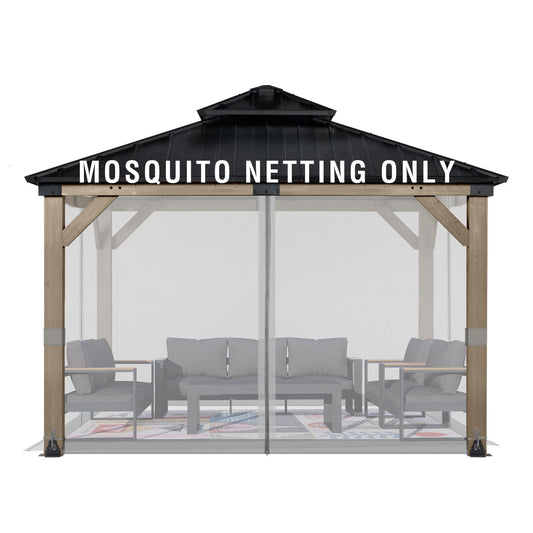
- Remove or store fabric curtains, screens, and mosquito netting — these trap snow and add unnecessary weight
- Inspect the gazebo roof top for any hairline cracks or panel shifts before winter sets in
- Store any gazebo sidewalls that aren't rated for cold-weather use

FAQs
Q: What snow load rating do I need for a gazebo?
At minimum, look for 20 PSF for general US climates. If you're in a heavy snow region — the Midwest snow belt, mountain states, or northern Canada — don't settle for less than 30 PSF.
Q: Can a hardtop gazebo stay up in winter?
Yes — provided it is properly anchored to the ground or deck, regularly cleared of snow accumulation, and rated for the snowfall levels in your area. A well-built hardtop with a steep roof pitch can handle winters comfortably with routine maintenance.
Q: What is a good gazebo snow load rating in kg/m²?
97 kg/m² (20 PSF) is a reasonable minimum for most climates. For extreme snow conditions, prioritize structures rated at 146 kg/m² (30 PSF) or higher.
Q: Does roof pitch affect snow load capacity?
Yes, significantly. A steeper pitch — generally 15 degrees or more — causes snow to slide off naturally under gravity, reducing the static load that builds up on flat or low-pitch roofs. In heavy snow zones, roof pitch can be just as important as the raw PSF rating.
Conclusion
Three variables determine how a gazebo performs in winter: PSF rating, anchoring quality, and roof pitch. Get all three right and you have a backyard structure that earns its place through every season.
For most American families in the northern US, a gazebo rated at ≥ 20 PSF with a concrete anchor kit and a pitched roof will handle a typical winter without trouble. For mountain regions, the snow belt, or anywhere that regularly sees heavy accumulation, don't go below 30 PSF — and pair it with 90+ mph wind resistance if your location is exposed.
Start with the Best Overall or Best for Extreme Snow picks above, or browse the full hardtop gazebo collection at Aoodor to find the right heavy snow load gazebo for your backyard and climate.

